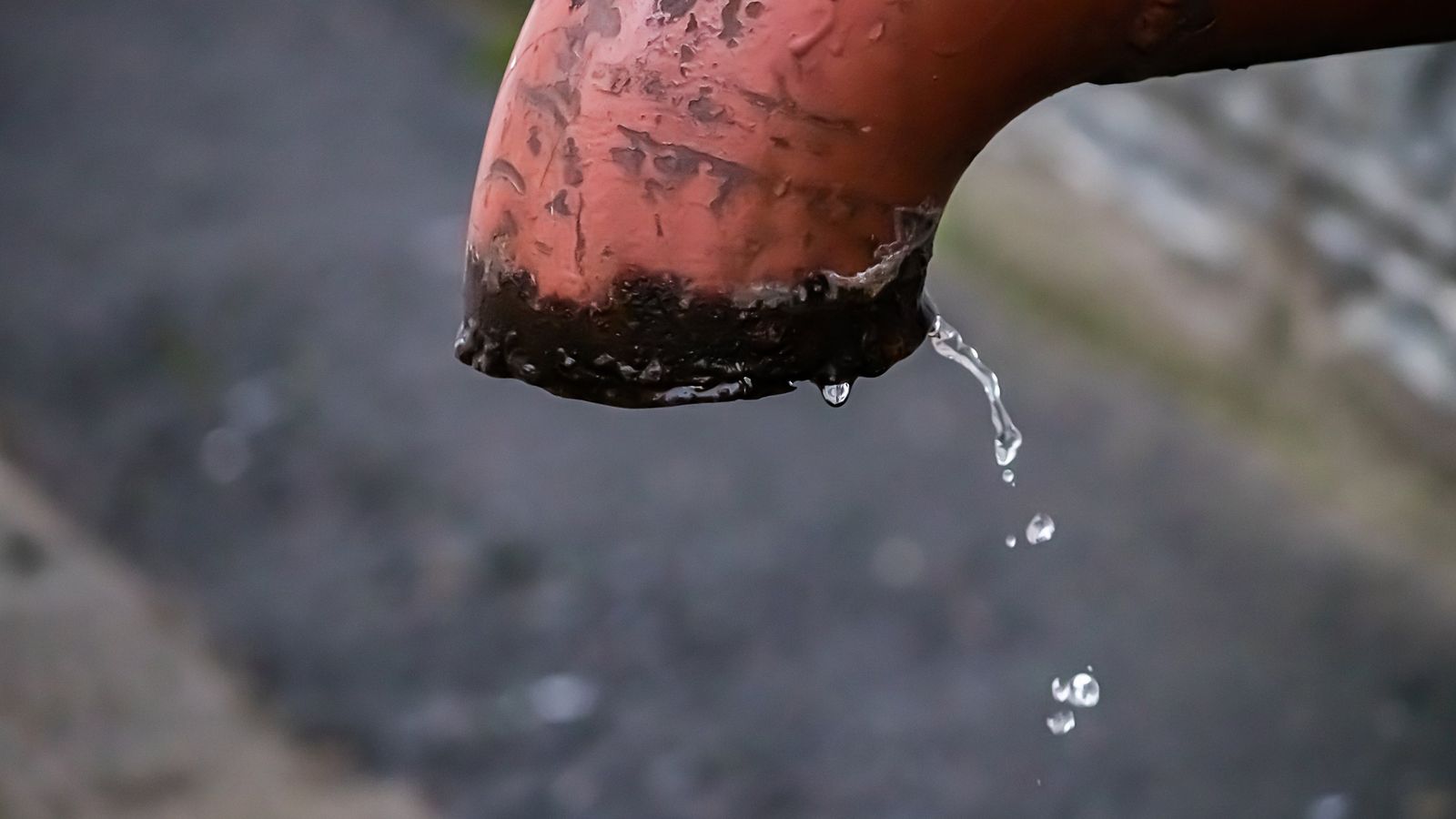
Burst or leaking pipe
Do this now: turn off the main water valve, then open the lowest faucets to drain the pipes. Switch off electricity to the area if water is near outlets and you can reach the breaker safely.
Call a plumber if: the pipe has split, the leak is inside a wall or ceiling, or you cannot stop it. Wet patches, bubbling paint and a sudden jump in your water bill can all point to a hidden leak.
Prevent it: insulate pipes in cold areas, keep your heating on when you are away in winter and know where the shut-off valve is.
Frozen pipes
Do this now: if a faucet only trickles in freezing weather, a pipe may be frozen. Keep the faucet open, then warm the pipe gently with a hair dryer, a space heater kept well away from anything flammable, or warm towels, working from the faucet back toward the frozen section.
Never use a blowtorch, propane heater or any open flame. It is a fire risk and can make the pipe burst.
Call a plumber if: you cannot find or reach the frozen section, the pipe has cracked, or water does not return after warming. Frozen pipes often split, and the leak only shows once they thaw.
Prevent it: on very cold nights, let faucets on outside walls drip, open the cabinet doors under sinks and disconnect garden hoses.
Overflowing toilet
Do this now: close the shut-off valve on the wall behind the toilet. If you cannot, lift the tank lid and raise the float to stop the tank refilling. Do not flush again.
Try a flange plunger, the kind with an extra rubber cup at the bottom, with firm, steady pushes. Avoid chemical drain cleaners in toilets.
Call a plumber if: plunging does not work, more than one toilet or drain is backing up (that points to a sewer problem), or water keeps running after the valve is closed.
Sewer backup
Do this now: stop using all water in the home, including toilets, sinks, the dishwasher and the washing machine. Every gallon you use has to go somewhere, and right now that is your floor. Keep children and pets away.
Call a plumber now if: sewage is coming up through floor drains, tubs or toilets, or several drains are gurgling and slow at once. These are signs of a blocked main sewer line. If the blockage is in the public sewer, your city or water utility is responsible, so it is worth calling them too.
Prevent it: do not pour grease down drains, flush only toilet paper (including so-called flushable wipes) and ask about a backwater valve if your area floods.
Leaking water heater
Do this now: switch off the power (electric) or turn the gas control to pilot or off (gas). Close the cold water supply valve on top of the tank. Water from the tank is hot, so take care.
Work out where the water is coming from. A leak from a pipe connection or the drain valve can often be fixed. A leak from the tank itself usually means the tank has corroded through and needs replacing.
Call a plumber if: the tank is leaking, the pressure relief valve keeps discharging, or you smell gas or see scorch marks near a gas heater.
No water at all
Check first: ask a neighbor if they have water, and check your water utility's website or social media for outages or main breaks. Make sure your own main valve is fully open and, in winter, check for frozen pipes.
Call a plumber if: the problem is only in your home and it is not a frozen pipe. If you are on a private well, the cause is often the well pump or pressure tank.
Blocked drains
Do this now: stop running water into the drain. Try a cup plunger on sinks and tubs, and pull hair out of tub and shower drains with a plastic drain tool.
Be careful with chemical drain cleaners. They can damage older pipes and are dangerous for a plumber to work around, so tell them if you have used one.
Call a plumber if: several drains are slow at once, water comes up in one fixture when you use another, or the blockage keeps coming back.
Sump pump failure
Do this now: check that the pump is plugged in and the breaker has not tripped. Make sure the float switch is not stuck against the side of the pit and the discharge pipe outside is not frozen or blocked.
Call a plumber if: the pump hums but does not pump, runs all the time, or the pit is filling and rain is still falling. A battery backup pump is worth considering if your basement floods regularly.
Frequently asked questions
What is the most common plumbing emergency?
Clogged drains and toilets are the most frequent calls, but burst pipes and water heater failures usually cause the most damage, because large amounts of water escape quickly.
How do I know if a leak is hidden in a wall?
Look for damp or stained patches, bubbling paint or wallpaper, a musty smell, warped floors or a water bill that suddenly jumps. With every faucet off, check whether your water meter is still moving. If it is, water is escaping somewhere.
Is a running toilet an emergency?
No. It wastes water and adds to your bill, but it will not damage your home. Close the valve behind the toilet and book a normal daytime repair.
Does homeowners insurance cover sewer backups?
Often not under a standard policy. Many insurers offer sewer and drain backup cover as an optional add-on. Check your policy, or ask your insurer.