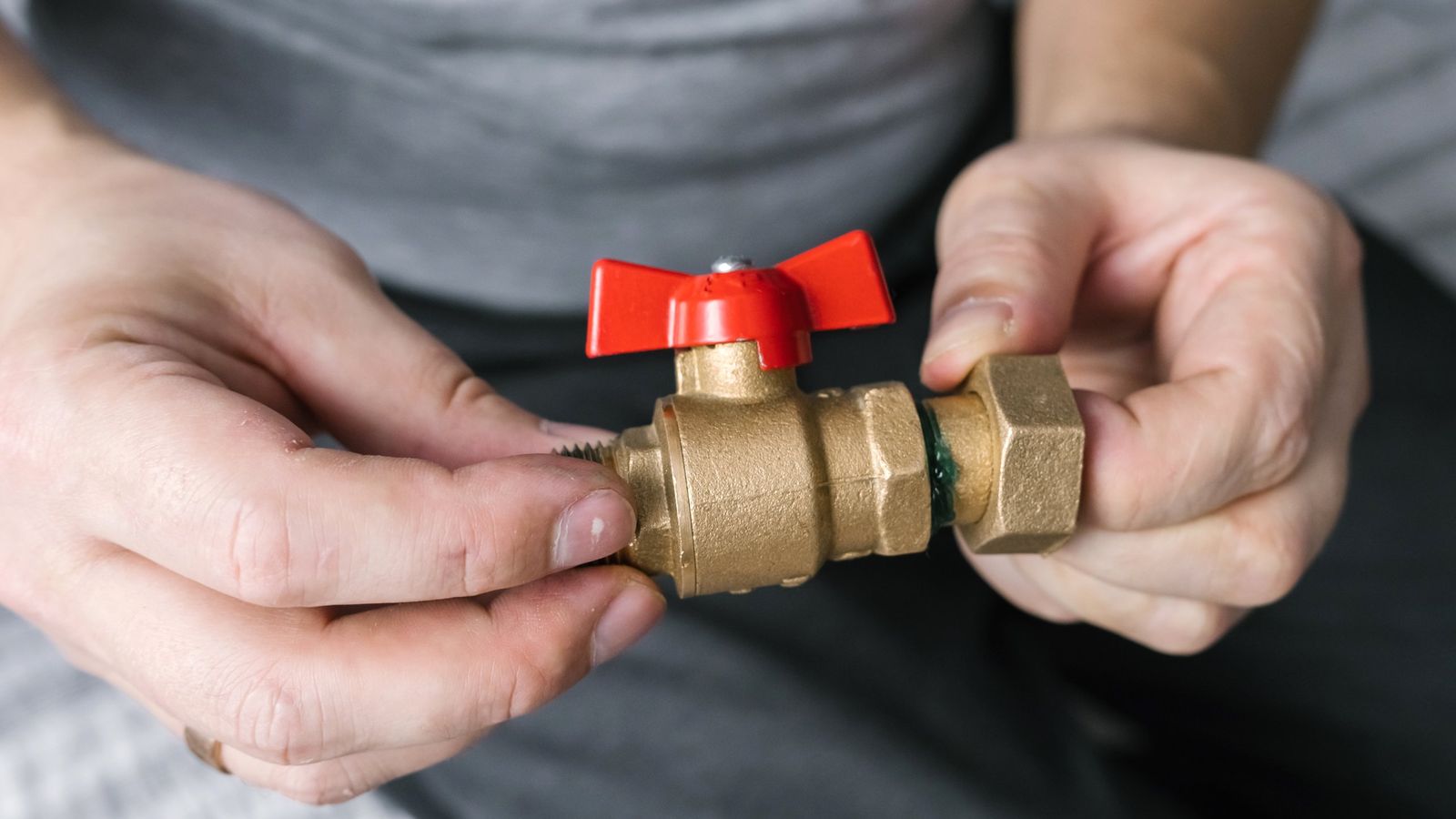
1. Stop the water
If the problem is at one fixture, look for its own shut-off valve first. Toilets have one on the wall behind or beside them, and most sinks have two under the basin. Turn the handle clockwise until it stops.
If the leak is in a pipe, you cannot find a fixture valve, or water is spreading fast, turn off the main water shut-off valve for the whole home. Common places to look:
- Where the water line enters the house, often in a basement, crawl space or utility room
- Near the water heater or under the kitchen sink
- In a garage or on an outside wall near the foundation
- In a box at the curb, next to the water meter
A round wheel handle turns clockwise to close. A lever handle is closed when it sits at a right angle to the pipe. A curb valve may need a special key, which you can buy at most hardware stores.
2. Make it safe
- Electricity: keep away from water near outlets, extension cords and appliances. If you can reach your breaker panel without standing in water, switch off power to the affected area. If you cannot, stay out and wait for help.
- Ceilings: a sagging, bulging ceiling can collapse. Keep people and pets out of the room and put a bucket underneath.
- Sewage: keep children and pets away and wear gloves. Sewage water carries bacteria, so do not try to clean large amounts up yourself.
- Water heater: for a gas heater, turn the gas control to off or pilot. For an electric heater, switch it off at the breaker. Then close the cold water valve on top of the tank.
3. Drain the system
Once the main valve is closed, there is still water in the pipes. Open the cold taps on the lowest floor and flush toilets to drain the lines and take the pressure off the leak. If your water heater is off, turn off the hot taps afterward.
4. Limit the damage
- Move furniture, rugs, electronics and valuables out of the water
- Mop and towel up standing water, and use a wet vac if you have one
- Open windows and run fans, if it is safe to use electricity
- Put buckets under drips and poke a small hole in a ceiling bulge to drain it into a bucket, only if the ceiling is not sagging badly
5. Document everything
Take photos and video of the source of the leak and all the damage before and during cleanup. Keep any damaged pipe or part the plumber removes. Your insurer will want this, and it helps if you need to dispute a bill later.
6. Call a licensed plumber
When you call, describe the problem, tell them you have shut the water off and ask three questions before they come out:
- What is your call-out or service fee?
- What is your hourly rate at this time of day?
- Are you licensed and insured?
If the water is off and nothing is getting worse, consider whether the repair can wait until normal business hours, when rates are lower. Our cost guide explains the difference, and our guide to choosing a plumber covers what to check.
7. Call your insurance company
Most home insurance policies cover sudden water damage, such as a burst pipe, but not damage from slow leaks or lack of maintenance. Flooding from outside is usually a separate policy. Call your insurer as soon as practical and ask before agreeing to large repairs.
Frequently asked questions
How long can I leave the water turned off?
As long as you need to. Turning off the main valve is safe for your plumbing. You will not have running water or flushing toilets, so keep some bottled water handy and fill a bucket for flushing before you shut it off, if there is time.
What if my main shut-off valve will not turn?
Do not force it with a wrench, as old valves can snap. Try the curb valve at the water meter instead, or call your water utility. Many utilities have a 24 hour line and can shut the water off at the street.
Should I turn off my water heater when the water is off?
If the water is going to be off for more than a short time, yes. A heater that keeps firing with no water coming in can be damaged. Switch an electric heater off at the breaker, and turn a gas heater's control to pilot or off.
Can I fix a burst pipe myself?
You can buy a pipe repair clamp or self-fusing tape as a temporary fix to get you through the night, but a burst pipe needs a proper repair by a plumber. The fix also needs checking for other damage, especially after a freeze.